
Sweet and syrupy white wines
Indulgence in a glass
Born in the heart of the Loire Valley, sweet and syrupy white wines embody the gentleness and generosity of the region.
Produced in sun-drenched terroirs shaped by the Loire and its tributaries, these wines reflect the richness of a mild climate and expertise passed down through generations of Loire winemakers. Behind their golden colour, these wines reveal a multitude of aromas of candied fruit, honey and white flowers.
Undeniable treasures of the region and the Loire heritage, the sweet and syrupy white wines of the Loire invite you to discover an aromatic palette that is both refined and balanced.
Chenin blanc: the soul of Loire sweet and syrupy wines
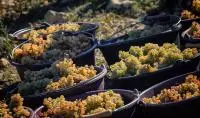
The emblematic grape of the Loire Valley, Chenin blanc, also known as Pineau de la Loire, expresses the diversity of the terroirs of Anjou, Saumur and Touraine. Harvested at the end of the harvest, after the development of botrytis or passerillage, it gives rise to wines of great aromatic complexity and exceptional ageing potential.
No other grape variety expresses the lightness and minerality of the Loire so well: its natural acidity balances sweetness and gives sweet wines a rare elegance.
Another, more confidential grape variety is used to produce sweet wines: Malvoisie. It is found notably in the Coteaux d'Ancenis appellation.
The great Loire appellations for sweet and syrupy wines
Mainly in Anjou and all the way to Touraine, the Loire region is home to terroirs ideal for the production of sweet and syrupy white wines under several appellations:
- Bonnezeaux: syrupy white wines of exceptional aromatic intensity
- Coteaux du Layon, Coteaux du Layon "Villages", 1er Cru Chaume, a refined expression of the Chenin grape variety, an appellation perfectly balanced between deliciousness and freshness.
- Quarts de Chaume Grand Cru: grand cru and one of France's most prestigious sweet AOP appellations. Renowned for its rich, complex wines.
- Coteaux de l'Aubance: wines with the aromatic complexity and balanced acidity characteristic of the great mellow wines of Anjou.
- Anjou-Coteaux de la Loire: appellation of harmonious mellow wines, all delicacy and quality.
- Coteaux de Saumur: a confidential sweet wine with a fresh profile
- Vouvray moelleux: luminous wines with notes of honey and exotic fruit.
- Coulée de Serrant: a unique 7-hectare appellation producing great biodynamic moelleux wines.

Profile of sweet white wines: aromas, colour, mouthfeel
With a golden to amber color, Loire sweet white wines offer an intense aromatic palette:
Candied fruit (apricot, quince, citrus),
Honey, white flowers, exotic fruit,
Notes of sweet spices and gingerbread depending on the cuvée and vintage.
On the palate, their unctuous texture counterbalanced by fine acidity guarantees freshness. This freshness cancels out any excess sweetness and possible heaviness. The finish is persistent and harmonious, a true signature of Loire wines.
Food and wine pairings with Loire moelleux and liquoreux wines
Perfect for moments of celebration and sharing, sweet and syrupy white wines go well with many dishes and recipes:
- As an aperitif: sweet white wine from the Loire goes very well with foie gras, blue cheese toast or dried fruit.
- With dishes: sweet white wines from the Loire are an elegant accompaniment to smoked salmon, world or sweet-and-salty cuisine.
- Cheeses: Loire white wine brings out the brilliance of blue-veined cheeses (Roquefort, Fourme d'Ambert) or sweet tommes.
- Desserts: yellow fruit tarts, caramelized pears and white chocolate desserts go very well with the sweetness of sweet white wines.
Sweet and syrupy wines can be enjoyed young with a fine balance between sweetness and freshness. They are excellent wines for laying down, revealing their full complexity with age.
Storage, serving and temperature
Served between 8°C and 10°C, sweet and syrupy white wines fully reveal their aromas without losing their freshness.
These wines in general, but the great vintages even more so, possess exceptional ageing potential, sometimes lasting several decades, especially the Quarts de Chaume Grand Cru.
Kept in a cool, dark cellar, they evolve towards amber hues and notes of wax, dried fruit and honey, living testimony to Loire know-how and the unique balance of Loire sweet and syrupy white wines.
What's the difference between a sweet wine and a syrupy wine?
A sweet white wine is characterized by a moderate residual sugar content (10 to 45 g/L), offering a soft but balanced palate and aromas of exotic fruits, white flowers, and custard. The sweet white wine, on the other hand, exceeds 45 g/L of sugars and achieves a more intense aromatic concentration: candied apricot, honey, quince, caramel.
The particularity of Loire moelleux and liquoreux white wines is the result of noble rot (Botrytis Cinerea) during late harvests, when the grapes, picked at perfect ripeness, concentrate sugars and aromas.
The secret of this harmony, the unique balance between sugar and acidity, is truly the signature of Loire sweet white wines, combining both richness and freshness.
What desserts to pair with sweet and syrupy Loire wines?
The Loire's sweet and syrupy wines go very well with fruit tarts and white chocolate desserts.
How does botrytis influence these wines?
The botrytis cinerea, also known as "noble rot", plays a key role in the production of sweet and syrupy Loire white wines. Under certain climatic conditions (morning fog followed by sunny days, for example), this fungus develops on the grapes, favoring their dehydration and thus concentrating sugars and aromas.
Result? Wines of great complexity, with intense notes of honey, candied apricot, exotic fruit and sweet spices, sublimated by a natural acidity that balances their richness. This unique process gives rise to exceptional cuvées capable of lasting through the decades.